

Importers to the United States need to immediately evaluate potential refund claims now that the U.S. Supreme Court has ruled the legal justification for tariffs implemented by the Trump Administration to be unconstitutional. The deadline to file protests is typically 180 days from the date of liquidation, and each passing day may permanently foreclose recovery of duties paid. It is advisable to consult with outside legal counsel while promptly reviewing the liquidation status of your entries and determine whether they remain within the statutory period to preserve your rights.
The Court ruled in a 6-3 decision that the International Emergency Economic Powers Act (“IEEPA”) does not authorize the President to impose tariffs, noting the White House would need explicit authorization from Congress. The February 20, 2026 decision invalidates tariffs imposed under national emergency declarations related to drug trafficking and trade deficits.
The case resulted from challenges by some states and importers after President Trump declared national emergencies in 2025 and imposed a variety of tariffs on more than one hundred countries. Those included 25% tariffs on most imports from Canada and Mexico, initial 10% tariffs on Chinese imports (later increased), and minimum “reciprocal” tariffs of 10% on all imports, with higher rates for certain countries. The Administration relied exclusively on IEEPA, which permits the President to “regulate … importation” during national emergencies.
The original challenge was heard by the U.S. Court of International Trade (CIT), and the CIT declared the tariffs invalid. That ruling was affirmed by the U.S. Court of Appeals for the Federal Circuit.
The Court held that:
The Court emphasized that in the nearly 50 years since IEEPA’s enactment, no President had used the statute to impose tariffs. Moreover, when Congress has delegated tariff authority in the past, it has done so expressly and with clear limitations.
Accordingly, the Court affirmed the Federal Circuit’s decision invalidating the tariffs.
The ruling does not address the mechanism by which companies may seek refunds of tariffs paid. The Court limited its holding to finding that IEEPA did not authorize the measures, without detailing refund procedures or establishing special rules.
In practice, refunds must be pursued under existing administrative procedures, which in certain cases will require filing protests or claims with U.S. Customs and Border Protection (CBP).
If your company paid tariffs imposed under IEEPA, it is advisable to immediately assess your position and available recovery options. Seeking the guidance of outside counsel should be part of this process. Procopio’s International Tax attorneys in our Washington, D.C. office are ready to review your specific circumstances and advise on the most appropriate next steps.

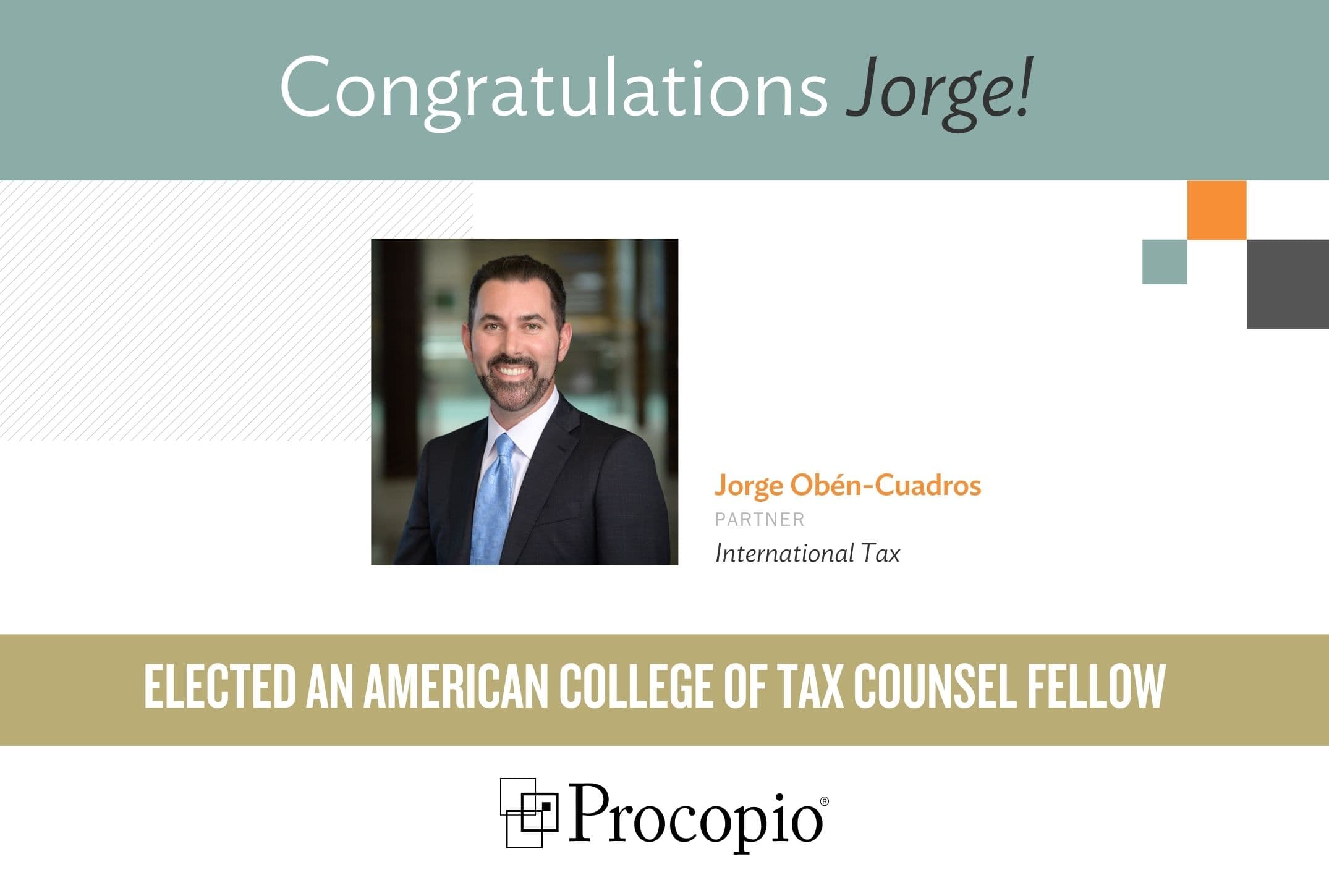
Jorge advises multinational companies, investment funds, family offices, and high-net-worth individuals on U.S. and international tax matters. Drawing on his private-practice and government experience, Jorge helps clients navigate cross-border tax planning, disputes, and policy developments with a practical understanding of how tax rules are developed, administered, and enforced.
His practice focuses on cross-border structuring, international tax planning and controversy, inbound and outbound investment, and strategic counseling on legislative and regulatory developments affecting global operations. He also advises clients on selected trade matters that intersect with their tax and cross-border business planning, with particular experience involving Latin America, Puerto Rico, and Europe.
Before joining Procopio, Jorge advised clients on cross-border tax planning and controversy matters. Earlier in his career, he served in the IRS Office of Associate Chief Counsel (International), where he drafted significant published guidance, including regulations implementing the Global Intangible Low-Taxed Income (GILTI) regime under Section 951A, and advised the IRS, the U.S. Department of the Treasury, and taxpayers on international tax issues. He also served as an IRS detailee to the U.S. House Committee on Ways and Means, where he worked on international and corporate tax legislation, Puerto Rico and U.S. territorial tax matters, trade-related tax issues, and energy provisions of the Inflation Reduction Act of 2022.
Jorge advises multinational companies, investment funds, family offices, and high-net-worth individuals on U.S. and international tax matters. Drawing on his private-practice and government experience, Jorge helps clients navigate cross-border tax planning, disputes, and policy developments with a practical understanding of how tax rules are developed, administered, and enforced.
His practice focuses on cross-border structuring, international tax planning and controversy, inbound and outbound investment, and strategic counseling on legislative and regulatory developments affecting global operations. He also advises clients on selected trade matters that intersect with their tax and cross-border business planning, with particular experience involving Latin America, Puerto Rico, and Europe.
Before joining Procopio, Jorge advised clients on cross-border tax planning and controversy matters. Earlier in his career, he served in the IRS Office of Associate Chief Counsel (International), where he drafted significant published guidance, including regulations implementing the Global Intangible Low-Taxed Income (GILTI) regime under Section 951A, and advised the IRS, the U.S. Department of the Treasury, and taxpayers on international tax issues. He also served as an IRS detailee to the U.S. House Committee on Ways and Means, where he worked on international and corporate tax legislation, Puerto Rico and U.S. territorial tax matters, trade-related tax issues, and energy provisions of the Inflation Reduction Act of 2022.

Pedro is a trusted advisor to global families and privately held multinational companies on a range of investments and operations across borders. His practice bridges international tax, estate planning, and corporate structuring with a deep understanding of the global business and policy environment. He guides high-net-worth families with members of multiple nationalities, family offices, and privately held multinational enterprises in structuring their cross-border investments, optimizing tax efficiency, and preserving multigenerational wealth. Pedro also advises internationally active athletes, entertainers, and other public figures on U.S. and cross-border tax matters, including the tax implications of global mobility, compensation, investments, and cross-border estate planning. He leads Procopio’s International Tax practice and the firm’s internal Corporate and Tax team.
With extensive experience across the U.S., Mexico, and Latin America, Pedro designs compliant and tax-efficient frameworks for wealth transfer, business succession, and international investment, ensuring alignment with both domestic and foreign legal systems. His work frequently involves advising on treaty interpretation, pre-immigration planning, expatriation, cross-jurisdictional entity governance, reporting obligations, and the tax implications of global mobility.
Pedro is a trusted advisor to global families and privately held multinational companies on a range of investments and operations across borders. His practice bridges international tax, estate planning, and corporate structuring with a deep understanding of the global business and policy environment. He guides high-net-worth families with members of multiple nationalities, family offices, and privately held multinational enterprises in structuring their cross-border investments, optimizing tax efficiency, and preserving multigenerational wealth. Pedro also advises internationally active athletes, entertainers, and other public figures on U.S. and cross-border tax matters, including the tax implications of global mobility, compensation, investments, and cross-border estate planning. He leads Procopio’s International Tax practice and the firm’s internal Corporate and Tax team.
With extensive experience across the U.S., Mexico, and Latin America, Pedro designs compliant and tax-efficient frameworks for wealth transfer, business succession, and international investment, ensuring alignment with both domestic and foreign legal systems. His work frequently involves advising on treaty interpretation, pre-immigration planning, expatriation, cross-jurisdictional entity governance, reporting obligations, and the tax implications of global mobility.
Patrick Ross, Senior Manager of Marketing & Communications
EmailP: 619.906.5740
Suzie Jayyusi, Senior Marketing Coordinator Events Planner
EmailP: 619.525.3818
Francisco Sanchez Losada, Marketing and Client Relations Manager
EmailP: 619.515.3225
Sanae Trotter, Senior Manager for Client Relations
EmailP: 650.645.9015