
California’s Ban on Non-Competes Is Reshaping Competition Through Trade Secret Litigation
California’s Ban on Non-Competes Is Reshaping Competition Through Trade Secret Litigation

The latest lawsuit between Apple and OpenAI, in which Apple alleges that OpenAI benefited from trade secrets retained by former Apple employees, has made headlines because of the companies involved and the high stakes in the race to develop AI technology. But the case also illustrates a broader legal trend that extends well beyond Silicon Valley.
California’s longstanding prohibition on most employee non-compete agreements has helped fuel innovation by allowing employees to move freely between companies. That mobility has been particularly important in industries such as artificial intelligence, where experienced talent is scarce and competition for specialized employees can be intense.
Because of this legal framework, however, companies have to rely on different mechanisms to protect their competitive advantages. For example, when companies cannot rely on non-compete agreements to limit employee mobility, they often turn to trade secret law to protect confidential information, proprietary technology, and business strategies.
As a result, California courts, both state and federal, see more trade secret litigation than courts in any other state. As AI companies compete aggressively for engineers, researchers, and product leaders with highly specialized knowledge, disputes over alleged misuse of trade secrets will become increasingly common.
The recent lawsuit between Apple and OpenAI reflects this dynamic. Whatever the ultimate outcome, the case serves as a reminder that hiring employees from competitors can create legal risks that begin well before any lawsuit is filed.
The Risk Begins During Onboarding
Companies often focus significant attention on recruiting top talent. They may, however, devote less attention to the legal and operational safeguards needed during the onboarding process.
An effective onboarding process should make clear that new employees are expected to rely on their general knowledge, skill, and experience, not confidential information belonging to a former employer. Written acknowledgments reminding employees not to bring, retain, or use another company’s confidential information should be a standard part of onboarding.
Depending on the organization’s business, technology, and litigation exposure, additional safeguards may also be appropriate. These can include:
- Restricting or disabling USB and other external storage devices on company-issued computers.
- Limiting access to personal cloud storage services from company devices.
- Monitoring unusual file transfer activity or other indicators of potential data movement during the early months of employment.
- Providing managers with training on how to avoid requesting or encouraging employees to share information obtained from former employers.
- Establishing clear procedures for reporting and addressing any inadvertent receipt of another company’s confidential information.
These measures are not intended to prevent employee mobility. Rather, they help ensure that companies benefit from an employee’s expertise while reducing the risk that proprietary information from a former employer enters the organization.
Protecting Innovation While Managing Risk
California’s policy favoring employee mobility has played a significant role in the state’s innovation economy. At the same time, that mobility increases the importance of carefully managing the onboarding of new employees.
As competition for AI talent accelerates, employers should expect trade secret disputes to remain a significant litigation risk. Companies that invest in thoughtful onboarding procedures and strong information governance will be better positioned to recruit top talent while minimizing the risk of costly trade secret litigation.
About the Authors

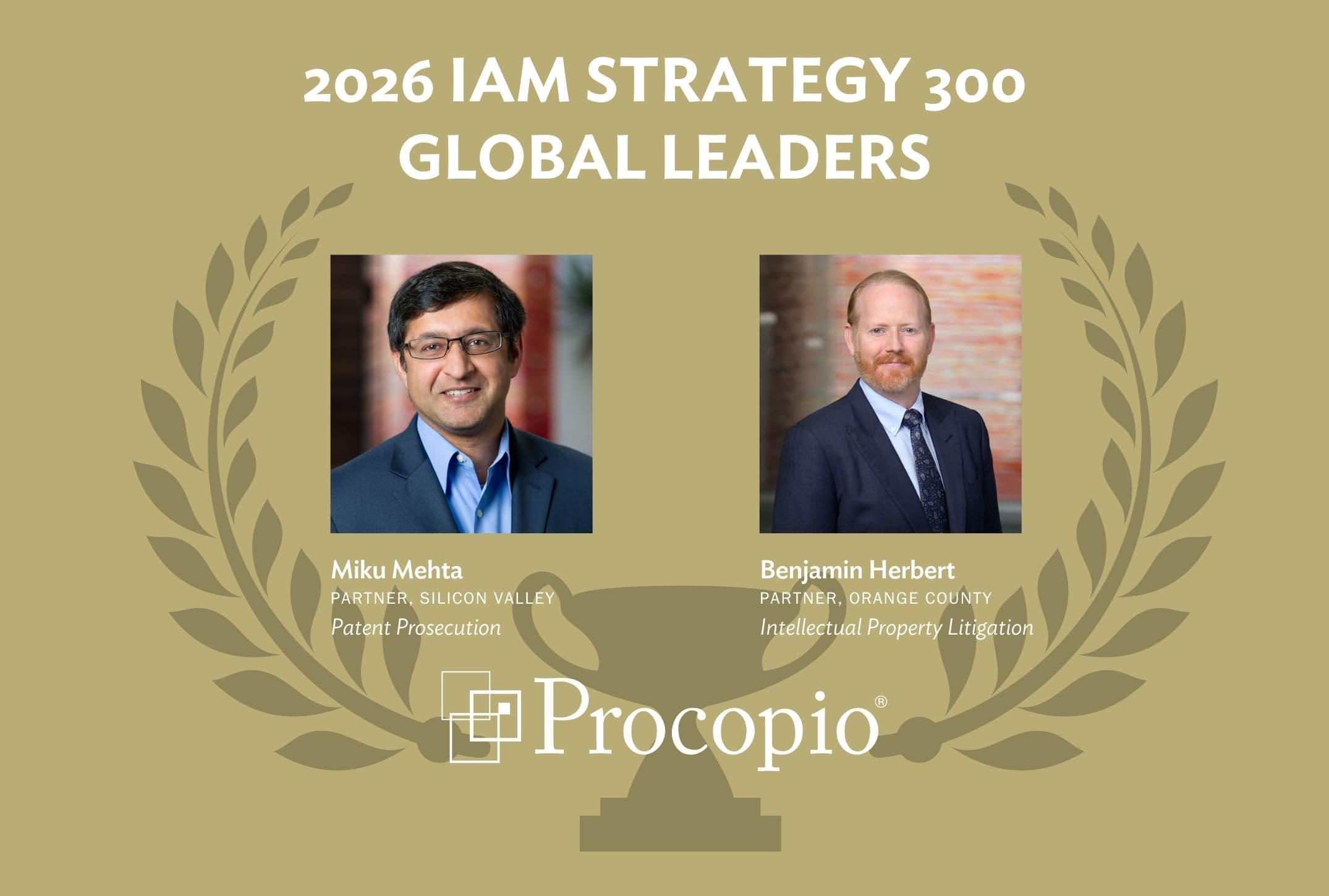
Benjamin Herbert
Ben focuses on patent infringement and trade secret misappropriation litigation. He has led multi-district patent litigation campaigns, successfully led early settlement negotiations in trade secret and patent litigations, and has experience evaluating potential disputes and determining litigation strategy. Ben has a record of success representing plaintiffs in intellectual property trials, having served as a key member of three trial teams that secured more than $1.5 billion in jury verdicts in the span of two years. He has litigated complex patent and trade secret cases involving diverse technologies, including digital radios, medical devices, consumer products, computer software and hardware, graphics processors, bitcoin mining, portable power generation, and satellite technology. Ben has significant experience representing clients in U.S. Patent and Trademark Office proceedings, including inter partes review, as well as before the U.S. Court of Appeals for the Federal Circuit. He also counsels clients on internal procedures, best practices, and licensing issues regarding intellectual property.
Ben focuses on patent infringement and trade secret misappropriation litigation. He has led multi-district patent litigation campaigns, successfully led early settlement negotiations in trade secret and patent litigations, and has experience evaluating potential disputes and determining litigation strategy. Ben has a record of success representing plaintiffs in intellectual property trials, having served as a key member of three trial teams that secured more than $1.5 billion in jury verdicts in the span of two years. He has litigated complex patent and trade secret cases involving diverse technologies, including digital radios, medical devices, consumer products, computer software and hardware, graphics processors, bitcoin mining, portable power generation, and satellite technology. Ben has significant experience representing clients in U.S. Patent and Trademark Office proceedings, including inter partes review, as well as before the U.S. Court of Appeals for the Federal Circuit. He also counsels clients on internal procedures, best practices, and licensing issues regarding intellectual property.
Stay up-to-date with the Procopio newsletter.
Sign Up NowMEDIA CONTACT
Patrick Ross, Senior Manager of Marketing & Communications
EmailP: 619.906.5740
EVENTS CONTACT
Suzie Jayyusi, Senior Marketing Coordinator Events Planner
EmailP: 619.525.3818
LATIN AMERICA CONTACT
Francisco Sanchez Losada, Marketing and Client Relations Manager
EmailP: 619.515.3225
ASIA PACIFIC CONTACT
Sanae Trotter, Senior Manager for Client Relations
EmailP: 650.645.9015